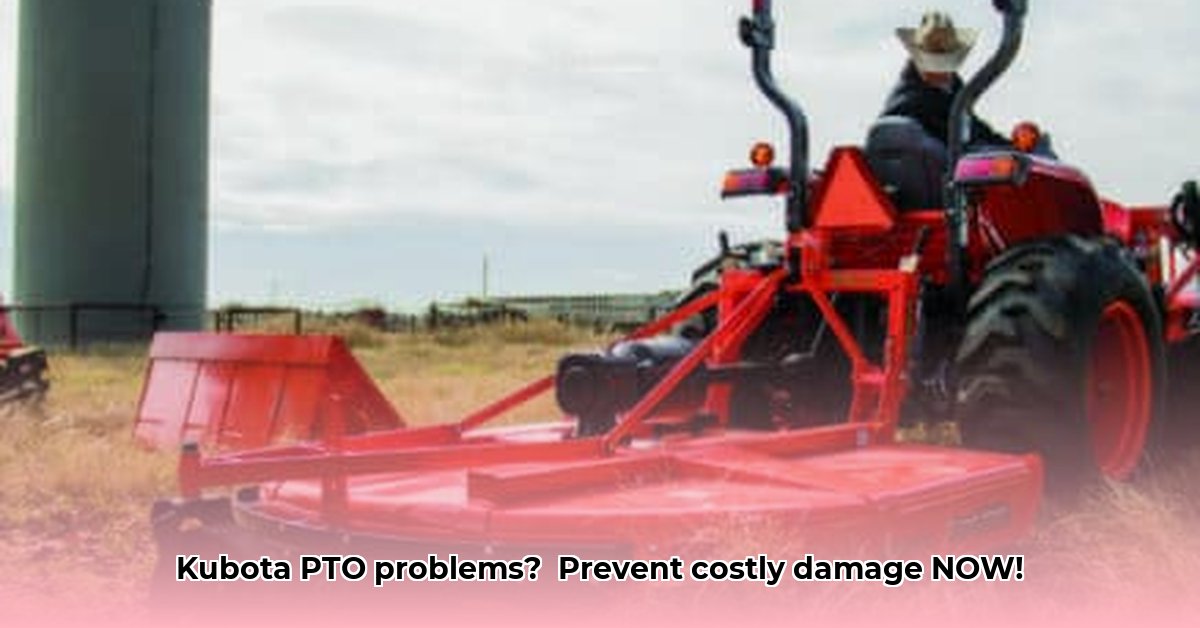
Safety First: Prioritizing Safe PTO Operation
Before engaging your Kubota tractor's Power Take-Off (PTO) (the system that transfers power from the tractor's engine to implements like mowers or tillers), safety is paramount. Failing to follow these steps can lead to serious injury or equipment damage. For additional information on Kubota tractor maintenance, see our coolant guide.
- Level Ground: Park your Kubota on a firm, level surface. Uneven ground can cause instability and accidents.
- PTO Shield Secured: Ensure the PTO shield is properly installed and securely fastened. This vital safety guard prevents contact with the rotating PTO shaft.
- Clear the Area: Keep the area around the tractor entirely clear of people and obstructions. A clear workspace minimizes the risk of accidents.
- Parking Brake Engaged: Engage the parking brake firmly before starting the tractor. This prevents unintentional movement.
Engaging the PTO: A Step-by-Step Guide
Kubota tractors offer several PTO types: live, independent, and electric. The engagement process varies slightly depending on your tractor's system.
Live PTO Engagement
A live PTO (directly connected to the engine) requires a coordinated approach:
- Warm-up: Start the engine and let it run until it reaches operating temperature. This ensures smooth PTO engagement.
- Depress Clutch: Fully depress the clutch pedal. This disengages the transmission, preventing sudden power surges.
- Engage PTO: Activate the PTO lever or switch (refer to your owner's manual for location).
- Gradual Release: Slowly release the clutch pedal while gently increasing engine speed. Avoid jerky movements. Monitor implement response for smooth engagement – adjust engine speed if necessary.
Independent PTO Engagement
An independent PTO (separately controlled) provides more flexibility:
- Warm-up: Start and warm the engine.
- Independent Clutch: Engage the independent PTO clutch (separate from the main clutch).
- Engage PTO: Activate the PTO lever or switch.
- Throttle Control: Gradually increase engine speed, monitoring the implement carefully. Rapid changes can cause damage.
Electric PTO Engagement
Electric PTO systems offer convenient push-button engagement:
- Warm-up: Start and warm the engine.
- Engage Switch: Press the electric PTO switch. A slight delay is normal.
- Gentle Acceleration: Gradually increase engine speed using the throttle. Avoid sudden increases. Overly rapid changes can damage components.
Disengaging the PTO: Safe Shutdown Procedures
Proper disengagement is crucial for safety and equipment longevity.
- Reduce Engine Speed: Gradually reduce engine speed to idle.
- Disengage PTO: Fully disengage the PTO lever or switch.
- Allow Coasting (If Necessary): For heavy implements, allow the PTO shaft to coast to a complete stop before further actions.
- Engine Shutdown: Turn off the tractor engine.
Troubleshooting Common PTO Issues
Addressing problems quickly prevents further damage and downtime.
- PTO Won't Engage: Check the PTO switch, lever, safety interlocks (if equipped), and hydraulic fluid levels (if applicable). Consult your manual or a mechanic if necessary.
- PTO Slipping: This usually indicates a worn clutch, requiring professional attention.
- Unusual Noises: Grinding, whining, or other unusual sounds signal potential mechanical problems. Stop immediately and seek professional assistance.
PTO Maintenance: Extending Equipment Life
Regular maintenance safeguards your investment.
- Lubrication: Regularly lubricate PTO components according to your owner's manual.
- Regular Inspections: Periodically inspect the PTO shaft, safety devices, and related components for wear or damage.
Key Takeaways: Safe and Efficient PTO Operation
- Smooth engagement: Avoid sudden movements when starting or stopping the PTO.
- Regular maintenance: Preventative maintenance extends equipment lifespan.
- Proper training: Understanding your tractor's PTO system ensures safety.
Remember, your Kubota owner's manual provides model-specific information. Always consult it for detailed instructions and safety precautions. Ignoring these guidelines risks costly repairs and potential injury.